
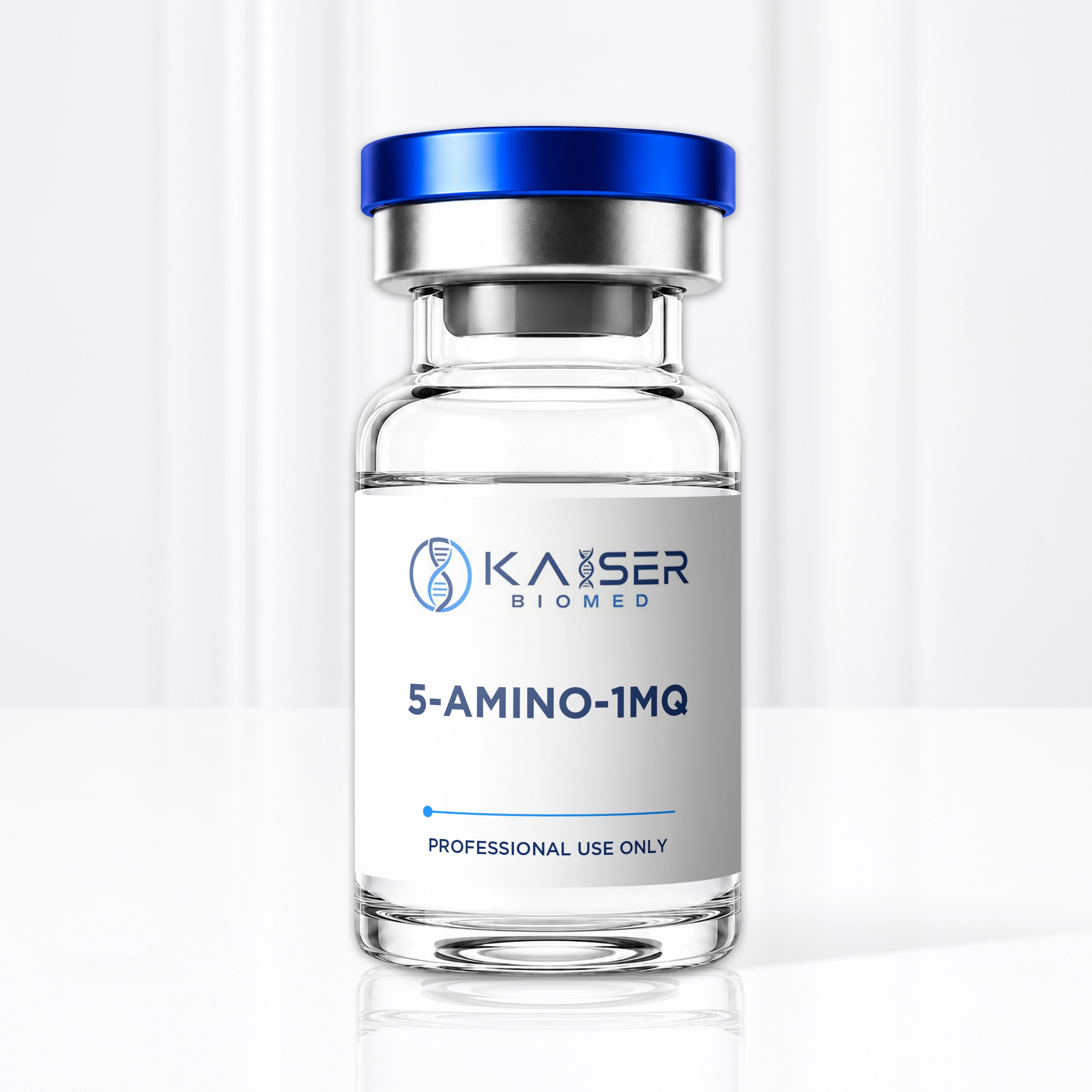
Description
Summary Abstract
5-Amino-1MQ (5-amino-1-methylquinolinium; 5A1MQ; CAS 42464-96-0) is a substrate-competitive, membrane-permeable inhibitor of nicotinamide N-methyltransferase (NNMT), a cytosolic enzyme overexpressed in adipose tissue and liver during obesity and type 2 diabetes. By occupying the nicotinamide-binding pocket of NNMT with an IC50 of 1.2 µM, 5-Amino-1MQ preserves intracellular NAD⁺ pools and S-adenosylmethionine (SAM), activating SIRT1/AMPK-dependent fat oxidation pathways without appetite suppression. In diet-induced obese murine models, treatment produced significant reductions in body weight, white adipose tissue mass (−35% over 11 days), adipocyte size, and plasma cholesterol, alongside improved glucose tolerance and attenuated hepatic steatosis. The compound distributes to metabolically active tissues — adipose, muscle, and liver — with pharmacokinetics characterized across subcutaneous, oral, and intravenous routes.
Clinical Indications
Preclinical data support investigation in the following metabolic contexts:
- Obesity and Adiposity: Diet-induced obese murine models show 5-Amino-1MQ reduces white adipose mass by 35% and adipocyte size by 30% in 11 days via NNMT inhibition and NAD⁺-mediated fat oxidation, without altering food intake.
- Insulin Resistance and Type 2 Diabetes: Oral/subcutaneous 5A1MQ dose-dependently improves glucose tolerance, suppresses hyperinsulinemia, and reduces liver weight and ALT/AST in DIO mice, consistent with improvement of early diabetic phenotypes.
- Sarcopenia and Skeletal Muscle Aging: NNMT is overexpressed in aging skeletal muscle; 5-Amino-1MQ enhanced proliferation, fusion, and regenerative capacity of muscle stem cells (muSCs) in aged murine models and promoted myoblast differentiation in C2C12 cell cultures.
Contraindications
- Unknown Human Safety Profile: All published data derive from murine and in vitro models; human pharmacokinetics, tolerability, and therapeutic index have not been established.
- Methylation-Sensitive Conditions: NNMT inhibition elevates SAM availability and alters the cellular methylation balance; caution is warranted in research models involving conditions sensitive to one-carbon metabolism disruption.
- Concurrent Hepatic Pathology Monitoring: Although 5A1MQ at pharmacological doses normalized ALT/AST in DIO mice, the compound’s liver distribution and engagement of NNMT in hepatic tissue warrant hepatic function monitoring in any chronic protocol.
Mechanism of Action (MOA)
5-Amino-1MQ disrupts a metabolic drain on the NAD⁺ salvage pathway, shifting adipose tissue toward energy expenditure:
NNMT Substrate-Site Inhibition
5-Amino-1MQ occupies the nicotinamide-binding pocket of NNMT (nicotinamide N-methyltransferase), blocking the enzyme’s catalytic transfer of a methyl group from S-adenosylmethionine (SAM) to nicotinamide. This prevents the production of 1-methylnicotinamide (1-MNA), preserving both NAD⁺ precursor supply and SAM pools in fat cells and liver.
NAD⁺ Restoration and Sirtuin Activation
By redirecting nicotinamide back into the NAD⁺ salvage pathway via NAMPT, NNMT inhibition raises intracellular NAD⁺ by 1.2–1.6× in adipocytes. Elevated NAD⁺ activates SIRT1 and SIRT3, promoting deacetylation of key metabolic enzymes involved in fatty acid oxidation, mitochondrial function, and PPAR-γ–regulated lipogenic gene suppression.
AMPK Activation and Lipogenesis Suppression
The resulting shift in the NAD⁺/NADH ratio activates AMPK (AMP-activated protein kinase), further promoting glucose uptake and fatty acid oxidation while reducing lipogenic gene expression. In 3T3-L1 adipocytes, 5-Amino-1MQ reduces triglyceride accumulation and adipocyte marker gene expression consistent with an anti-lipogenic rather than lipolytic phenotype.
Key Features & Specifications
5-Amino-1MQ offers a distinct intracellular enzymatic mechanism within the metabolic research compound class:
Chemical Analysis
| Property | Specification Reference Data |
|---|---|
| IUPAC Name | 5-amino-1-methylquinolin-1-ium |
| CAS Number | 42464-96-0 (iodide salt) |
| Molecular Formula | C10H11N2+ (free cation); C10H11IN2 (iodide salt) |
| Molecular Weight | 173.21 g/mol (free cation); 300.11 g/mol (iodide salt) |
| PubChem CID | 950107 |
| Synonyms | 5A1MQ, NNMTi, 5-Amino-1-methylquinolinium iodide |
| Form / Variation | 10 MG (SKU P-045) / 50 MG (SKU C-001) |
Storage, Safety, and Handling
Storage Protocol
Store as a dry solid at −20 °C, protected from light and moisture. Once weighed, prepare stock solutions in DMSO or aqueous buffer per validated protocols; stability in solution at −20 °C is typically 12 months when properly sealed. Avoid repeated freeze-thaw cycles to prevent degradation.
Handling & Compliance
Handle with nitrile gloves, lab coat, and eye protection. 5-Amino-1MQ is a charged quinolinium salt; avoid inhalation of powder during weighing by working in a well-ventilated fume hood or biosafety cabinet. The compound is not currently listed on the WADA prohibited list; however, investigators conducting sports science research should verify current regulatory status prior to use in studies involving athletes.