
Description
Summary Abstract
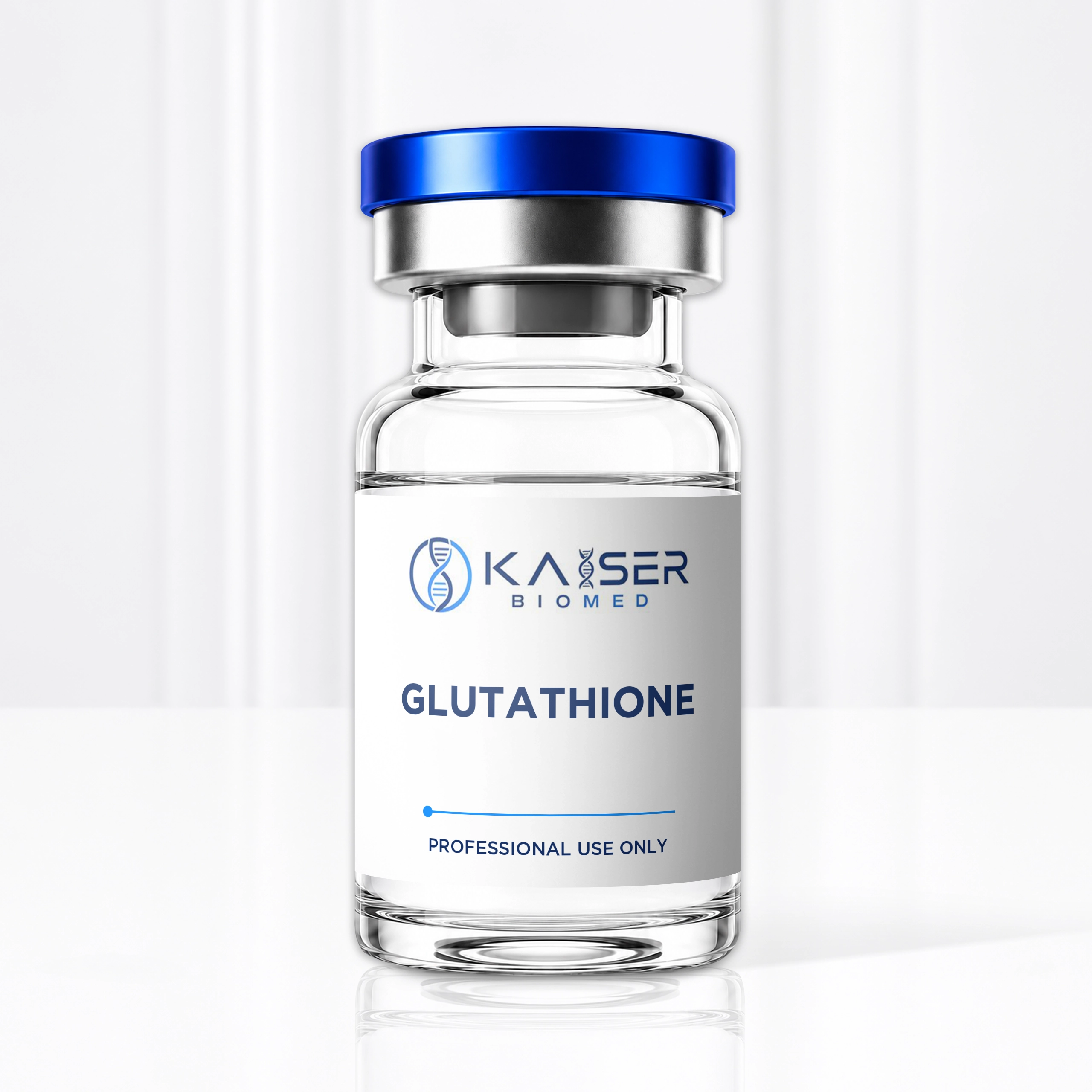
Glutathione (GSH; γ-glutamylcysteinylglycine; L-Glutathione; Coenzyme GSH) is a tripeptide composed of γ-glutamic acid, cysteine, and glycine, linked by an unusual γ-peptide bond between glutamate and cysteine that renders GSH resistant to most peptidases. Present at intracellular concentrations of 1–10 mM — roughly 1,000-fold higher than extracellular concentrations — it functions as the primary intracellular antioxidant buffer, a cofactor for GPx and glutathione S-transferase (GST) enzymes, a mediator of protein redox regulation via S-glutathionylation, and an activator of the Nrf2/ARE transcriptional pathway. The GSH/GSSG ratio is the primary cellular indicator of redox status. Oral bioavailability of conventional GSH is <1% due to intestinal γ-glutamyl transferase (GGT) hydrolysis; injectable preparations bypass this limitation entirely. Clinical evidence spans cardiovascular endothelial function restoration (Kugiyama et al., 1998), hepatic ALT/AST reduction in NAFLD, and immune biomarker enhancement. Available at Kaiser BioMed as 600 MG lyophilized (P-014, $50) and 200 MG/mL reconstituted injectable (A-008-F).
Clinical Indications
Glutathione has been evaluated in controlled clinical and mechanistic research across cardiovascular, hepatic, immunological, and neurological domains:
- Cardiovascular Endothelial Function: Kugiyama et al. (1998) restored acetylcholine-induced coronary vasodilation in patients with coronary artery disease via intracoronary infusion, demonstrating superoxide-mediated NO inactivation as a primary driver of eNOS-dependent endothelial dysfunction.
- NAFLD / Hepatic Oxidative Stress: Systematic review data and individual trials document consistent ALT and AST reductions with oral GSH supplementation (300 mg/day) in NAFLD patients; enhanced-bioavailability formulations (liposomal, S-acetyl) are required for meaningful oral delivery.
- Immune Function: Liposomal glutathione pilot RCT demonstrated nearly doubled GSH in whole blood and PBMCs, accompanied by enhanced NK cell cytotoxic activity — relevant to immune research in aging and chronic disease.
- Neurodegeneration: GSH depletion in the substantia nigra is among the earliest detectable biochemical changes in Parkinson’s disease; IV GSH infusion has been studied in small pilot trials for PD.
- Phase II Drug Detoxification: GST-mediated GSH conjugation to electrophilic drug metabolites (e.g., NAPQI from acetaminophen) is the primary hepatoprotective mechanism; GSH pool size directly limits detoxification capacity.
Contraindications
- High-Dose IV for Cosmetic Indications: High-dose IV glutathione for skin lightening has been linked to anaphylaxis, nephrotoxicity, hepatotoxicity, and Stevens-Johnson Syndrome; FDA issued a 2019 warning citing bacterial endotoxin contamination in unregulated IV products — these risks are dose- and indication-specific.
- Concurrent PARP Inhibitor Therapy: Pharmacological GSH supplementation at high doses may transiently alter protein S-glutathionylation patterns and enzyme activities; interactions with oncology-directed PARP inhibitor protocols require pharmacological review.
- Alkaline Reconstitution Buffer: GSH is most stable at acidic pH (4–6); reconstitution in alkaline buffers accelerates oxidation to GSSG; only freshly prepared sterile water at neutral–acidic pH should be used.
Mechanism of Action (MOA)
Glutathione operates through five separable biochemical mechanisms that collectively maintain cellular redox homeostasis:
Direct ROS Scavenging & GPx Cofactor
GSH donates a hydrogen atom to neutralize hydroxyl radicals (·OH), superoxide (O2·−), and lipid peroxyl radicals; two GSH molecules are oxidized to GSSG per H2O2 equivalent neutralized. Glutathione peroxidase (GPx) enzymes (GPx1–8) use GSH as the obligate electron donor for H2O2 and hydroperoxide reduction; GPx activity is directly limited by GSH availability.
Phase II Detoxification (GST) & S-Glutathionylation
Glutathione S-transferases (GST) conjugate GSH to electrophilic compounds — reactive drug metabolites, environmental carcinogens, and lipid aldehydes — producing water-soluble conjugates for urinary export. Protein S-glutathionylation (reversible mixed disulfide formation) protects critical cysteine residues from irreversible oxidation and serves as a redox signaling mechanism regulating enzyme activity and transcription factor binding.
Nrf2/ARE Activation & Mitochondrial Protection
GSH depletion liberates Nrf2 from Keap1 repression; activated Nrf2 drives transcription of antioxidant response element (ARE) genes including GPx, GST, thioredoxin reductase, and the rate-limiting GSH biosynthesis enzyme γ-glutamylcysteine synthetase (GCS). The mitochondrial GSH pool (10–15% of total cellular GSH) protects the electron transport chain and mitochondrial DNA from ROS generated during oxidative phosphorylation.
Key Features & Specifications
Glutathione is available at Kaiser BioMed in parenteral-grade preparations optimized for direct systemic delivery:
Chemical Analysis
| Property | Specification Reference Data |
|---|---|
| Sequence | γ-Glu-Cys-Gly (γ-peptide bond between Glu and Cys) |
| CAS Number | 70-18-8 |
| Molecular Formula | C10H17N3O6S |
| Molecular Weight | 307.32 g/mol |
| PubChem CID | 124886 |
| Synonyms | Glutathione (reduced); GSH; γ-glutamylcysteinylglycine; L-Glutathione; Coenzyme GSH |
| Form / Variation | 600 MG Lyophilized (P-014) / 200 MG/mL × 20 mL Reconstituted (A-008-F) |
Storage, Safety, and Handling
Storage Protocol
Lyophilized GSH (P-014) must be stored at −20°C, strictly protected from light, moisture, and oxygen; the free thiol group is highly susceptible to oxidation — prefer nitrogen-purged or vacuum-sealed vials and reconstitute immediately before use. Reconstituted injectable (A-008-F) should be refrigerated at 2–8°C and used within 24–48 hours; do not expose to air for extended periods and use amber or foil-protected containers. Yellow-orange discoloration indicates partial oxidation to GSSG; discard immediately as oxidized glutathione has markedly different pharmacology. Reconstitute with freshly prepared sterile water for injection at neutral-to-acidic pH; avoid alkaline buffer which accelerates thiol oxidation.
Handling & Compliance
Prepare solutions under sterile technique with gloves and appropriate PPE; minimize ambient exposure during handling. IV administration at therapeutic research dose ranges demonstrates an acceptable safety profile in controlled cardiovascular and neurological trials; the safety signals associated with high-dose cosmetic IV GSH are dose- and indication-specific and should not be generalized to research concentrations. Glutathione as a direct preparation (CAS 70-18-8) is not FDA-approved as a standalone drug but is available as a pharmaceutical-grade compounded injectable for licensed practitioners. The 2019 FDA warning addressed high-dose IV preparations for cosmetic skin lightening from unregulated sources.