
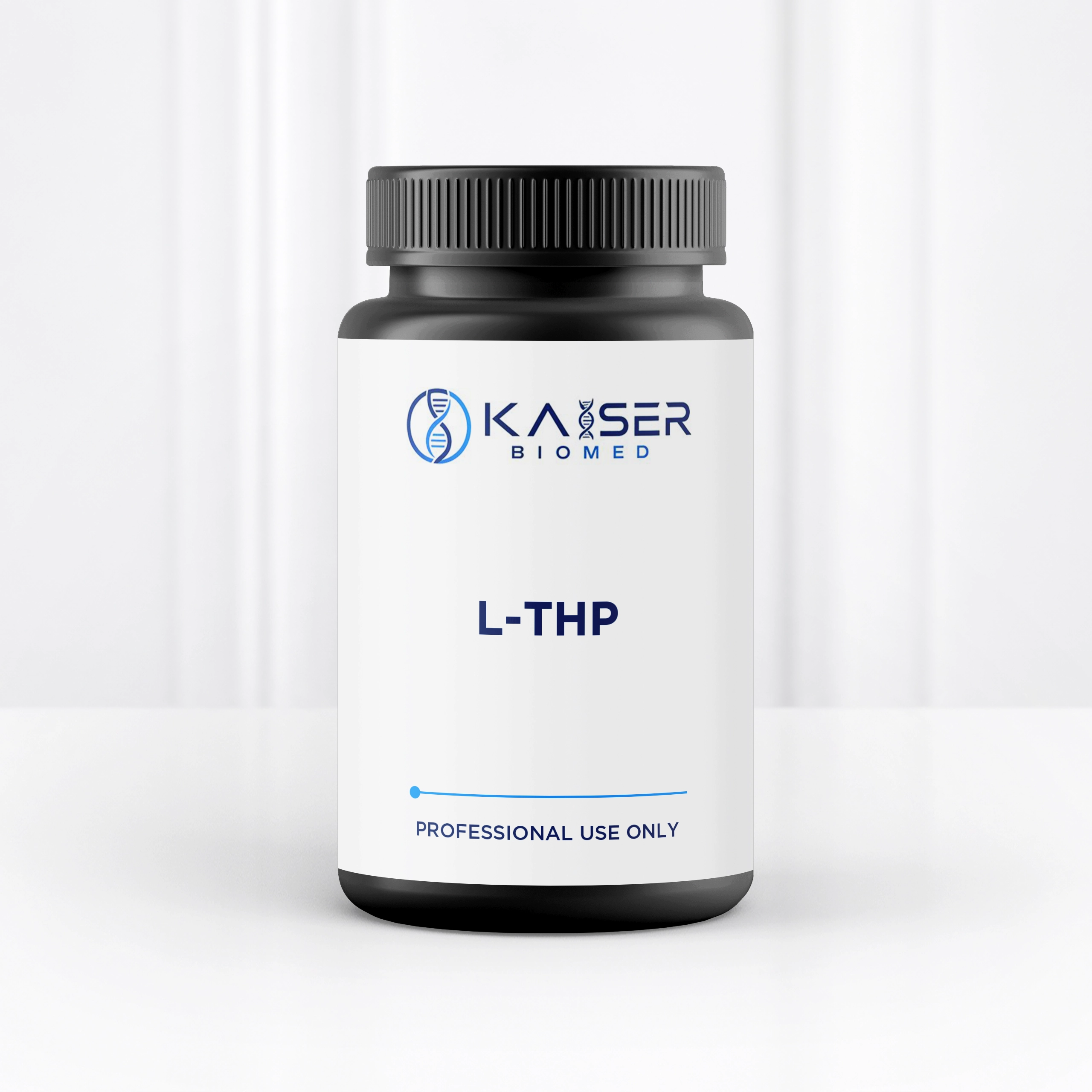
Description
Summary Abstract
L-Tetrahydropalmatine (levo-tetrahydropalmatine; L-THP; Rotundine; CAS 483-14-7) is a tetrahydroprotoberberine isoquinoline alkaloid isolated primarily from Corydalis yanhusuo and related Stephania species. It acts as a mixed dopamine receptor modulator with preferential partial agonism at D1 receptors and antagonism at D2 and D3 receptors, while secondarily engaging α1– and α2-adrenergic receptors and multiple serotonin receptor subtypes. Clinically, L-THP has been used in China for more than four decades under the trade name Rotundine as an analgesic and sedative. Research interest has expanded to include its role in attenuating substance use disorder, neuropathic pain, and neuroinflammation via suppression of NF-κB–mediated cytokine pathways and inhibition of microglial activation.
Clinical Indications
Published research has evaluated L-THP across several overlapping pharmacological contexts:
- Neuropathic and cancer pain: L-THP produces dose-dependent antinociceptive effects mediated via D1 receptor agonism and D2 receptor antagonism in striato-PAG pain circuits, reducing thermal hyperalgesia and mechanical allodynia.
- Substance use disorder: Multiple preclinical and early clinical studies demonstrate attenuation of cocaine, heroin, and methamphetamine self-administration and cue-induced reinstatement through D2/D3 receptor antagonism in the caudate-putamen and nucleus accumbens.
- Neuroinflammation and oxidative stress: L-THP downregulates TNF-α, IL-6, and IL-18 via NF-κB pathway suppression and inhibits microglial activation, supporting investigation in neuroinflammatory models.
Contraindications
- Dopamine-sensitive conditions: Given its D2 antagonist activity, caution is warranted in models involving Parkinson’s disease or prolactin-sensitive contexts.
- Concurrent MAO inhibition: L-THP exhibits weak monoamine oxidase inhibitory activity; co-administration with other MAOIs or serotonergic agents may potentiate effects.
- Cardiovascular sensitivity: At higher doses, L-THP has been reported to induce mild hypotension and bradycardia through striatal dopaminergic modulation; cardiac-sensitive models should be monitored accordingly.
Mechanism of Action (MOA)
L-THP exerts its pharmacological effects through concurrent engagement of multiple monoamine receptor systems, yielding a nuanced neuromodulatory profile:
Dopamine Receptor Modulation
L-THP functions as a partial D1 agonist and D2/D3 antagonist. Blockade of presynaptic D2 autoreceptors in the striatum disinhibits adenylyl cyclase via Gs-mediated signaling, elevating PKA activity in the caudate-putamen and engaging the striatum–arcuate nucleus–PAG descending antinociceptive pathway.
Adrenergic and Serotonergic Engagement
Receptor profiling studies demonstrate high-affinity binding of L-THP to α1A– and α2A-adrenergic receptors and secondary engagement of 5-HT1A, 5-HT1D, 5-HT4, and 5-HT7 receptors. This polypharmacology underpins the observed sedative–hypnotic properties without significant abuse liability.
Anti-inflammatory and Neuroprotective Signaling
L-THP suppresses microglial activation and downregulates NF-κB–driven expression of TNF-α, IL-6, and IL-18 in spinal cord tissue. It also modulates the ERK/NF-κB pathway following hepatocyte injury and reduces vascular adhesion molecules (ICAM-1, VCAM-1, E-selectin) in endothelial models.
Sigma-1 Receptor Interaction
Intrathecal L-THP inhibits sigma-1 receptor (Sig-1R)–induced mechanical allodynia, and synergistic blockade with the selective Sig-1R antagonist BD1047 confirms a spinal component of its antinociceptive action independent of dopaminergic pathways.
Key Features & Specifications
L-THP offers a pharmacological profile of interest across pain, addiction, and neuroinflammation research contexts:
Chemical Analysis
| Property | Specification Reference Data |
|---|---|
| IUPAC Name | (13aS)-2,3,9,10-tetramethoxy-5,8,13,13a-tetrahydro-6H-isoquino[3,2-a]isoquinoline |
| CAS Number | 483-14-7 |
| Molecular Formula | C21H25NO4 |
| Molecular Weight | 355.4 g/mol |
| PubChem CID | 72301 |
| Synonyms | Levo-tetrahydropalmatine, Rotundine, l-THP, Gindarine, Hyndarine, (−)-Tetrahydropalmatine |
| Form / Variation | Capsules — C-047 ($38.00) |
Storage, Safety, and Handling
Storage Protocol
Store capsules at controlled room temperature (15–25 °C) in a dry environment, away from light and moisture. Bulk powder form should be kept in airtight containers at 2–8 °C for extended stability. Avoid freeze-thaw cycling of prepared solutions.
Handling & Compliance
Handle with standard laboratory PPE including gloves and eye protection. L-THP is not scheduled under international controlled substance conventions; however, dopamine receptor–active compounds require careful documentation in neurological and addiction research protocols. Researchers should verify local regulatory requirements prior to procurement.