
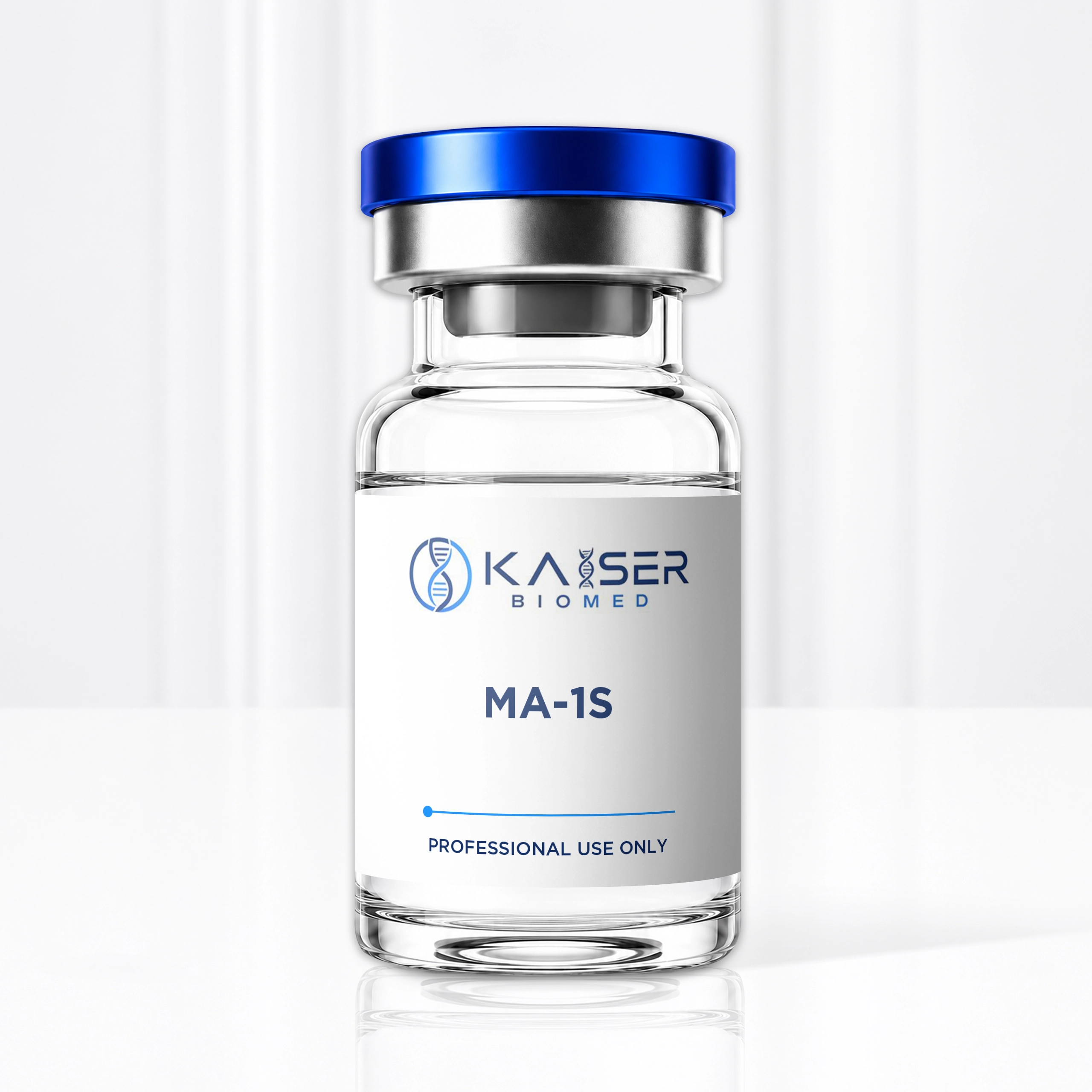
Description
Summary Abstract
MA-1S is a synthetic, acylated long-acting GLP-1 receptor agonist peptide engineered for once-weekly subcutaneous administration. The compound is structurally based on the human glucagon-like peptide-1 (GLP-1) sequence with targeted amino acid modifications to resist dipeptidyl peptidase-4 (DPP-4) enzymatic cleavage at the N-terminus and a C-18 fatty diacid side chain linked via a mini-PEG spacer that enables high-affinity, reversible albumin binding. These engineering features extend the native GLP-1 half-life from approximately 1–2 minutes to approximately 165 hours, supporting a once-weekly dosing interval. MA-1S activates GLP-1 receptors on pancreatic β-cells, hypothalamic appetite centers, gastrointestinal enteroendocrine cells, and the cardiovascular system, producing glucose-dependent insulin secretion, glucagon suppression, appetite reduction, slowing of gastric emptying, and weight loss — the full pharmacological profile of the GLP-1 receptor agonist class.
Clinical Indications
MA-1S is investigated across the spectrum of metabolic and cardiometabolic research contexts relevant to GLP-1 receptor biology:
- Type 2 diabetes and glycemic control: Long-acting GLP-1R agonism reduces fasting glucose primarily through enhanced insulin secretion and glucagon suppression rather than gastric emptying delay — the mechanism profile characteristic of once-weekly GLP-1 agents, producing clinically meaningful HbA1c reductions in intervention studies.
- Obesity and appetite regulation: Central GLP-1R activation in hypothalamic nuclei (particularly the arcuate nucleus and area postrema) reduces appetite through neuropeptide Y/AgRP pathway suppression, producing significant and dose-dependent body weight reduction in preclinical and clinical settings.
- Cardiovascular and renal protection research: GLP-1 receptor activation on cardiomyocytes, endothelial cells, and renal tubular cells is associated with cardioprotective and renoprotective effects in research models, including attenuation of inflammatory signaling and reduction of oxidative stress in endothelium.
Contraindications
- Gastric motility endpoints: Long-acting GLP-1R agonists produce tachyphylaxis to gastric emptying delay; studies with GI transit as a primary endpoint should account for this effect diminishing with sustained peptide exposure (typically by day 14–23).
- Thyroid C-cell models (rodent): GLP-1R is expressed on rodent thyroid C-cells; chronic GLP-1R agonism is associated with C-cell hyperplasia in murine models, a species-specific finding not replicated in non-human primates or human trials but relevant for thyroid-focused rodent research.
- Models of acute pancreatitis susceptibility: GLP-1R agonist class effects include a low-frequency association with pancreatic enzyme elevation; relevant for research models involving pancreatic inflammation or stress.
Mechanism of Action (MOA)
MA-1S achieves its long-acting GLP-1 receptor agonist profile through structural and pharmacokinetic engineering applied to the native GLP-1 scaffold:
GLP-1 Receptor Activation
MA-1S binds and activates the GLP-1 receptor (GLP-1R), a class B G-protein–coupled receptor, via its modified GLP-1 peptide backbone. Gsα–cAMP–PKA signaling in pancreatic β-cells stimulates glucose-dependent insulin secretion; GLP-1R activation in hypothalamic and brainstem satiety centers reduces appetite and energy intake.
DPP-4 Resistance via N-Terminal Modification
Native GLP-1 is cleaved by dipeptidyl peptidase-4 (DPP-4) at the Ala8–Glu9 bond within seconds of release. MA-1S incorporates a non-natural amino acid (Aib, α-aminoisobutyric acid) at position 8, rendering the N-terminus sterically inaccessible to DPP-4, converting the plasma half-life from seconds to days without compromising receptor affinity.
Albumin Binding via Fatty Acid Acylation
A C-18 fatty diacid chain is conjugated via a mini-PEG linker to lysine at position 26 (Lys26) of the peptide backbone. The fatty acid binds reversibly and with high affinity to serum albumin, creating a circulating reservoir: the albumin-bound fraction is pharmacokinetically inert; the small free fraction activates GLP-1R. This maintains continuous receptor engagement over the ~165-hour (≈7-day) half-life.
Downstream Metabolic Effectors
GLP-1R activation via MA-1S drives a coordinated metabolic response: pancreatic β-cell proliferation and anti-apoptotic signaling (via PI3K/Akt), hepatic glucose production suppression (indirect, via reduced glucagon), delayed gastric emptying (tachyphylaxis-prone with sustained dosing), and reductions in postprandial triglycerides through chylomicron secretion inhibition.
Key Features & Specifications
MA-1S represents the pharmacological class of long-acting GLP-1 receptor agonists with engineered albumin-binding and DPP-4 resistance:
Chemical Analysis
| Property | Specification Reference Data |
|---|---|
| Class | Acylated, long-acting GLP-1 receptor agonist peptide |
| Internal Code | MA-1S |
| Structural Features | Modified GLP-1 backbone; Aib at position 8 (DPP-4 resistance); Arg at position 34; C-18 fatty diacid via mini-PEG linker at Lys26 |
| Approximate MW | ~4,100 g/mol (class reference) |
| Half-Life | ~165 hours (~7 days) |
| Route | Subcutaneous injection (lyophilized, reconstituted) |
| Form / Variation | 5 MG Lyo — P-035 ($49.00) / 10 MG Lyo — P10-034 ($84.00) |
Storage, Safety, and Handling
Storage Protocol
Store lyophilized MA-1S vials at −20 °C, sealed and protected from light, until use. Upon reconstitution with bacteriostatic water or sterile saline, store at 2–8 °C and use within 28 days; do not refreeze reconstituted solution. Protect from UV exposure and avoid mechanical agitation of reconstituted peptide.
Handling & Compliance
Reconstitute under aseptic conditions using appropriate PPE; administer via 27–30 gauge needle for subcutaneous protocols. As a GLP-1 receptor agonist, MA-1S research falls under regulatory frameworks governing peptide hormones; obtain applicable institutional ethics approvals before initiating in vivo studies. WADA S2 class peptide hormone.