
Description
Summary Abstract
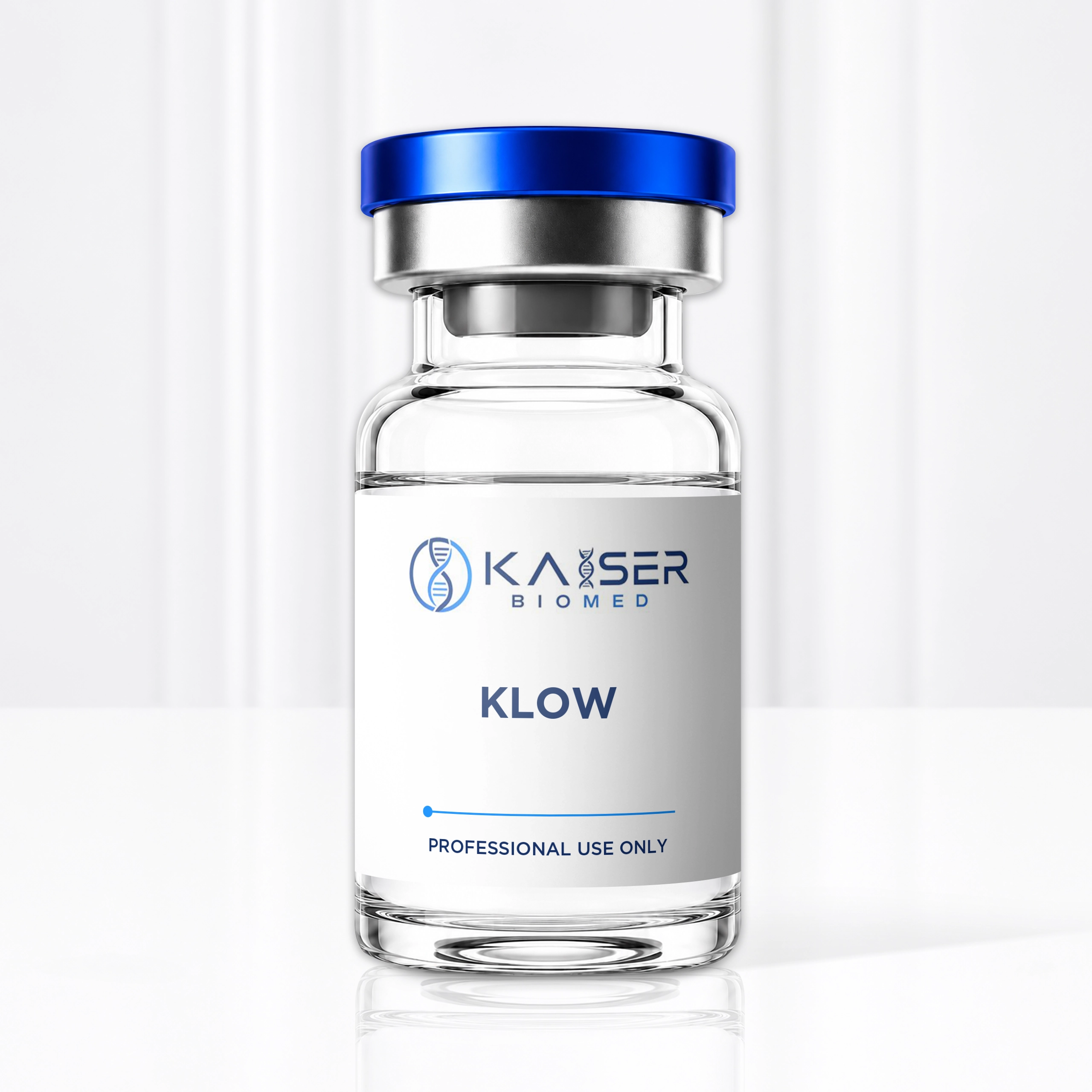
KLOW (P-054; GHK-Cu 20 MG + TB-500 20 MG + BPC-157 20 MG + KPV 20 MG; 80 MG total lyophilized blend) extends the three-component Glow formulation by adding KPV — the C-terminal tripeptide (Lys-Pro-Val) of alpha-melanocyte-stimulating hormone (α-MSH) — to create a four-component blend that addresses collagen synthesis, directed cell migration, angiogenesis, and inflammation suppression in a single preparation. KPV‘s primary mechanism operates independently of melanocortin receptor binding: the tripeptide is internalized via the peptide transporter PepT1 and directly blocks nuclear translocation of the NF-κB p65/RelA subunit, suppressing transcription of TNF-α, IL-1β, IL-6, and IL-8 — the cytokine environment that otherwise impedes tissue repair. Combined with GHK-Cu‘s matrix remodeling, TB-500‘s actin-driven migration, and BPC-157‘s angiogenic activity, KLOW provides a comprehensive multi-pathway approach to wound healing, gastrointestinal mucosal repair, and inflammatory tissue restoration contexts.
Clinical Indications
The four-component KLOW blend is relevant to research contexts where inflammation is an active barrier to tissue repair:
- Inflammatory Bowel Disease and Mucosal Repair: KPV has demonstrated significant reductions in colitis severity in DSS-induced and TNBS-induced murine models via PepT1-mediated intracellular delivery to inflamed intestinal epithelium; combined with BPC-157’s gastric cytoprotection and mucosal repair activity, KLOW addresses both inflammatory suppression and structural mucosal regeneration.
- Wound Healing in Inflammatory Environments: Chronic wounds (diabetic ulcers, infected surgical sites) are characterized by elevated TNF-α and IL-6 that impair fibroblast function and angiogenesis; KPV’s NF-κB blockade reduces this pro-inflammatory burden while GHK-Cu, TB-500, and BPC-157 restore the regenerative capacity of the healing tissue.
- Dermal and Connective Tissue Anti-Inflammatory Recovery: The combination of GHK-Cu’s collagen remodeling with KPV’s MAPK/NF-κB dual-pathway suppression is relevant to post-procedural dermal recovery, atopic dermatitis research, and connective tissue inflammation contexts where both structural repair and inflammatory resolution are required.
Contraindications
- Active Malignancy: The pro-angiogenic components (BPC-157 via VEGFR2, GHK-Cu via VEGF induction) represent a theoretical risk in oncological contexts where tumor vascularization is a concern.
- Severe Immunosuppression: KPV’s NF-κB blockade further suppresses inflammatory signaling; in severely immunocompromised individuals where residual inflammatory activity provides pathogen defense, additional immunomodulation should be considered carefully.
- Known Copper Metabolism Disorders: GHK-Cu contributes bioavailable copper; Wilson disease and related copper overload conditions require caution regarding cumulative copper exposure from all dietary and therapeutic sources.
- Pregnancy: Pro-angiogenic, pro-proliferative, and immunomodulatory signals from all four components present an incompletely characterized risk profile in the gestational context.
Mechanism of Action (MOA)
KLOW combines four complementary peptide mechanisms that address distinct phases and barriers of the wound-healing and mucosal repair cascade:
GHK-Cu — Collagen Synthesis and Matrix Remodeling
GHK-Cu (glycyl-L-histidyl-L-lysine:Cu(II); CAS 49557-75-7) drives collagen I, III, and IV synthesis in dermal fibroblasts while activating lysyl oxidase for collagen cross-linking. Simultaneously, it induces controlled matrix metalloproteinase (MMP-2, MMP-9) activity to remove damaged extracellular matrix, creating the structural framework for new tissue. GHK-Cu also activates VEGF and FGF signaling to amplify the regenerative growth factor milieu alongside BPC-157’s parallel VEGFR2 axis.
TB-500 — Actin Sequestration and Cell Migration
TB-500 (thymosin β4 LKKTETQ fragment) sequesters monomeric G-actin in a 1:1 complex, governing cytoskeletal remodeling in migrating cells and enabling directed migration of keratinocytes, fibroblasts, and endothelial cells into wound areas. The PINCH-ILK-Akt survival axis is also activated, protecting newly migrated cells from apoptotic loss in the early repair environment.
BPC-157 — VEGFR2 Angiogenesis and NO Cytoprotection
BPC-157 (GEPPPGKPADDAGLV; CAS 137525-51-0) upregulates VEGFR2 to drive capillary formation and restore tissue perfusion, and bidirectionally modulates the NO system to protect regenerating tissue from ischemic oxidative stress. FAK-paxillin pathway activation reinforces fibroblast collagen organization in concert with GHK-Cu’s matrix synthesis signals.
KPV — NF-κB Nuclear Translocation Blockade
KPV (Lys-Pro-Val; α-MSH C-terminal tripeptide) is internalized by cells via the PepT1 peptide transporter (SLC15A1) — overexpressed in inflamed intestinal epithelium — and directly competes with importin-α for binding to the NF-κB p65/RelA armadillo domains 7–8, physically preventing nuclear translocation. This receptor-independent intracellular NF-κB blockade suppresses transcription of TNF-α, IL-1β, IL-6, IL-8, COX-2, and iNOS, dismantling the inflammatory environment that impedes the proliferative repair phase driven by the other three blend components.
Key Features & Specifications
Defining properties of the KLOW four-component regenerative-anti-inflammatory blend:
Chemical Analysis
| Property | Specification Reference Data |
|---|---|
| Component 1 — GHK-Cu | Gly-His-Lys:Cu(II); CAS 49557-75-7; MW 340.38 g/mol (free peptide); 20 MG per vial |
| Component 2 — TB-500 | Thymosin β4 LKKTETQ actin-binding domain fragment; MW ~887 g/mol (heptapeptide); 20 MG per vial |
| Component 3 — BPC-157 | GEPPPGKPADDAGLV; CAS 137525-51-0; MW 1419.53 g/mol; 20 MG per vial |
| Component 4 — KPV | Lys-Pro-Val; α-MSH(11-13) C-terminal tripeptide; MW ~342 Da; CAS 69278-67-7; 20 MG per vial |
| Total Blend | 80 MG lyophilized powder |
| Form / Variation | Lyophilized powder, single vial (P-054) — $134.00 |
Storage, Safety, and Handling
Storage Protocol
Store lyophilized KLOW blend at −20 °C, protected from light and humidity. Reconstitute with bacteriostatic water for injection; add solvent slowly along the inner vial wall and swirl gently to dissolve. GHK-Cu may require slightly extended dissolution time due to copper coordination chemistry. Reconstituted solution is stable at 2–8 °C for up to 28 days; protect from direct light and avoid freeze-thaw cycling.
Handling & Compliance
Handle with standard laboratory PPE under aseptic technique. BPC-157 is listed under WADA S4 (Hormone and Metabolic Modulators); TB-500/thymosin β4 is also classified under WADA S4; relevant compliance obligations apply in competitive sports research contexts. KPV’s NF-κB–inhibitory activity may modulate concurrent immunological experimental conditions. GHK-Cu contributes bioavailable copper — account for cumulative copper exposure in extended protocols.